
Key Takeaways:
Moving budgets often feel overwhelming and unpredictable when you’re trying to plan ahead. According to the U.S. Census Bureau, most families move locally within the same county, yet many still struggle to predict their total costs.
But here’s what you can control. The answer to how much moving and storage cost depends on four main factors: labor time, distance, stairs and access challenges, and add-on services like packing or storage. Great Job Moving and Storage provides transparent, region-specific guidance to help families across Virginia, Maryland, and DC budget with confidence. Start planning your worry-free move with Great Job Moving and Storage today.
We know moving costs can feel overwhelming when you’re trying to plan your family’s budget. Several key elements determine your moving expenses, and understanding these helps you prepare without unpleasant surprises. Your final price depends on three main areas: the time and complexity required to move your belongings, the distance and logistics of your move, and any additional services you choose.
The biggest cost driver for most families is how long your move takes. Movers typically charge based on duration, and several elements can take longer than most families anticipate. Stairs, elevators, long carries from your door to the truck, and delicate items all require extra care and time. A third-floor apartment with narrow hallways costs more than a ground-floor home with direct truck access. Children’s furniture, family heirlooms, and artwork need careful handling that adds time to your move. Local moves in the Virginia, Maryland, and DC area typically range from $450 to $1,800, depending on these complexity considerations.
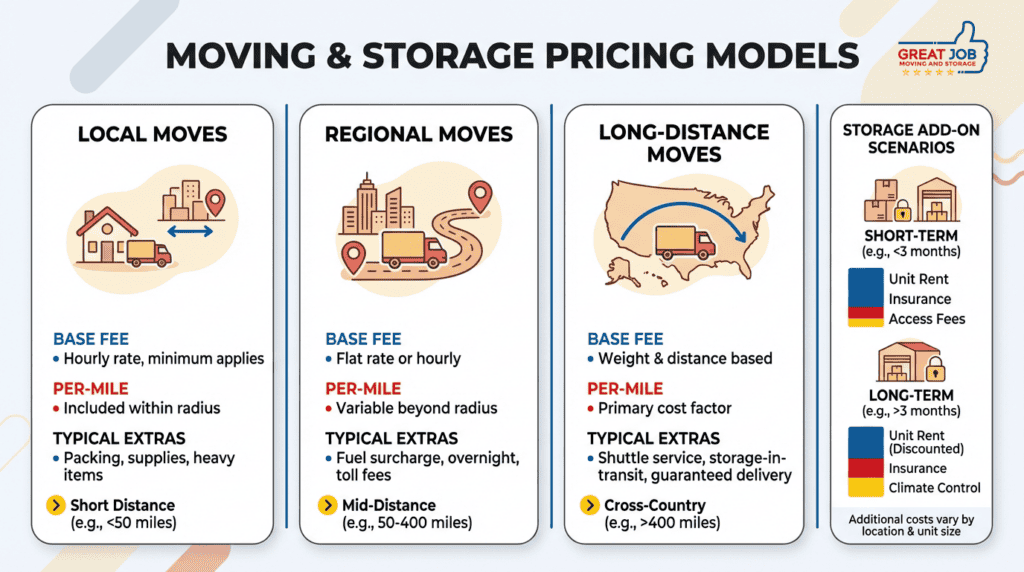
Local and long-distance moves use completely different pricing structures. Local moves within approximately 50 miles (this threshold can vary by company) typically charge by the hour, making your inventory size and access challenges the primary cost considerations. Long-distance moves usually switch to flat-rate pricing based on weight or volume, plus mileage. Interstate moves follow federal regulations requiring written estimates and specific pricing disclosures. Urban areas with parking restrictions or building access requirements can add time and fees to any move type.
Two major add-on services can substantially impact your budget but offer real benefits for busy families. Professional packing services can double your labor costs but save you weeks of preparation time and provide better protection for your family’s belongings. Storage solutions add monthly fees that vary based on unit size, climate control needs, and how long you need the space. Many families underestimate these services during planning, leading to unexpected costs that could have been budgeted upfront with proper guidance.
Understanding how moving and storage costs differ for local vs. long-distance moves helps families budget accurately and choose the right additional services like storage. Distance affects both the pricing model and how these services are handled.
| Move Type | Pricing Model | Typical Home Size | Est. Labor/Transit | Typical Cost Range* | Storage Add-Ons* |
|---|---|---|---|---|---|
| Local (under 50 miles) | Hourly rate | 2-3 bedroom | 3-4 movers, 4-8 hours | $800-$2,400 | $75-$150/month |
| Regional (50-150 miles) | Hourly + travel time | 2-4 bedroom | 3-4 movers, 6-10 hours | $1,200-$3,500 | $100-$200/month |
| Long-Distance (150-500+ miles) | Weight/flat rate | 3-4 bedroom | 2-3 days transit | $2,800-$6,500 | $125-$275/month |
| Interstate/Out-of-Region | Regulated pricing based on weight and distance | 3-5 bedroom | 3-7 days transit | $4,200-$9,800+ | $150-$300/month |
For local moves within the Washington, D.C. metropolitan area, moving companies like Great Job Moving and Storage typically charge by the hour since travel time is minimal. Long-distance relocations follow federal regulations that require weight-based or binding estimates, making costs more predictable but often higher due to fuel, lodging, and longer work hours.
Storage rates increase with distance because items may need climate-controlled facilities and longer-term arrangements when coordinating delivery timelines across multiple states. *Ranges are estimates and actual costs depend on specific circumstances, inventory complexity, and service selections.
Smart families know that saving money on your move doesn’t mean sacrificing care for your belongings. These proven strategies help you control costs while keeping your family’s possessions safe and your timeline on track.
When families across Virginia, Maryland, and DC apply these cost-saving approaches thoughtfully, they often reduce their moving expenses by 20-30% without compromising the safety of their belongings. The key is knowing which tasks you can handle yourself and which ones benefit from professional expertise backed by written estimates and transparent pricing.
Moving expenses can feel unpredictable when you’re planning your family’s budget. These frequently asked questions address the specific concerns parents have about pricing transparency, unexpected charges, and storage billing practices.
Don’t worry – reputable movers will explain potential extra charges upfront. Common additions include long carry fees when your home sits far from where the truck can park, stair charges for multi-level moves, and shuttle service for narrow streets. Packing materials and specialty handling for pianos or artwork may also apply. Your residential moving consultant will walk through these possibilities during your free estimate.
A thorough estimate lists every item being moved and all requested services. It should show estimated labor hours and clearly outline any potential fees. Binding estimates offer the best protection by guaranteeing your final cost won’t exceed the quoted amount. The document should also include pickup and delivery dates, insurance options, and payment terms.
Basic coverage comes included, but only pays 60 cents per pound if something breaks – that means a 50-pound TV would only be covered for $30. Full-value protection costs extra but covers repair, replacement, or full replacement value for damaged items. For families with electronics, furniture, or sentimental pieces, this upgraded coverage provides real peace of mind during your move.
Most facilities bill monthly, though some prorate charges based on your move-in date. For example, if you move in on the 15th of a 30-day month, you’d pay half that month’s rate. Unit size, climate control, and location drive monthly costs. Climate-controlled units usually cost 20-50% more than standard units. Many local moving companies offer flexible short-term storage with transparent billing.
Peak season (May through September) and weekends generally cost more due to higher demand. Mid-week and mid-month moves often offer better pricing and more crew availability. Summer months can see rates increase by 10-20% compared to winter relocations. Booking your Alexandria move during quieter periods can provide significant savings while ensuring your preferred moving team is available.
Moving costs depend on four main factors: labor time, distance, inventory complexity, and add-on services like packing or storage. Getting a detailed, written estimate based on an in-home or virtual inventory gives you the clearest picture of your actual expenses. When you’re ready to move forward, your family deserves a moving and storage quote from professionals who understand what matters most. Great Job Moving and Storage brings over 66,000 completed moves, a 99% satisfaction rate, and the licensed expertise to protect both your belongings and your budget during your move.